


Powerful Odor and Corrosion Control for Lift Stations

The Air+ Odor Beast is an ionization-based scrubber designed for continuous odor reduction and corrosion protection in wet wells, lift stations, manholes, and other wastewater headspaces. It helps control hydrogen sulfide (H₂S) and other odor-causing compounds before they become a problem for operators, facilities, and nearby communities.

The Odor Beast neutralizes H2S and other odorous and corrosive gases at the source.

Wastewater odors from lift stations, manholes, interceptors, and holding tanks can generate community complaints, impact those living, working, or playing nearby, and affect employee comfort and well-being.

Durable, Fits Any
Environment

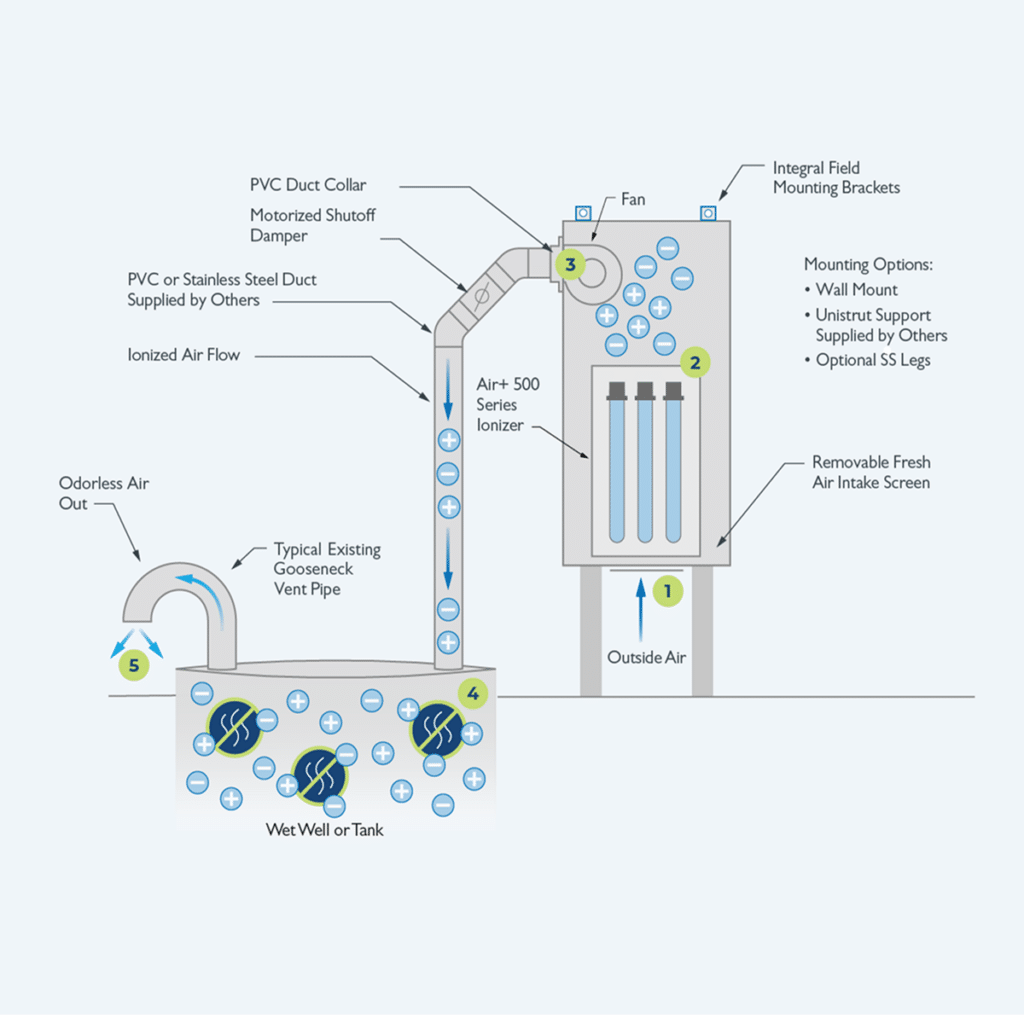
The Odor Beast can be wall mounted or is available with legs to be installed adjacent to a wet well or tank. An air intake filter, fan, and ionizer are housed within a NEMA 4X weatherproof enclosure for added protection.

Virtually No Maintenance

The Odor Beast is built using a stainless steel enclosure, a fiberglass fan, and non-corroding components, designed for long-term performance in harsh environments. Maintenance is minimal, requiring only annual tube replacement and periodic filter cleaning/replacement.

Multiple Sizes & Airflow Options

Available in 250 and 500 CFM airflow configurations, the Odor Beast is sized to meet the needs of a wide range of lift station and other applications. Each unit features an actuated damper that closes on loss of power to avoid H₂S backing up into the unit.

Request a Lift Station Demo​

See the OdorBeast in action with a free lift station demonstration.
Name(Required)

The small but powerful unit is designed to treat the headspace of:

How The Odor Beast Works

  1. Ambient air is drawn into the Odor Beast by the fan through the filter screen and past the ionizer.
  2. The ionization tubes produce millions of positively and negatively charged oxygen ions (O2+ & O2- ).
  3. Ions are delivered to the treated area through PVC or stainless steel ductwork.
  4. Odorous and corrosive gases in the treated space are oxidized on contact with the charged ions.
  5. Air is discharged from the treated space, free of odor and hydrogen sulfide (H₂S).

From Odor Complaints to Proven Control

The City of Leesburg, Florida aimed to maintain goodwill with its residents. To support this, the wastewater treatment department explored low-maintenance, cost-effective odor control solutions for lift stations. Due to the strong performance of the Odor Beast, the city made the decision to mandate its installation at all new lift stations within city limits.

Technical Specifications

The Odor Beast uses advanced bipolar ionization to neutralize odor- and corrosion-causing compounds at the source. This creates a clean, comfortable environment while extending the life of pumps, the wet well, and controls.
What Our Customers Say

There is nothing else that can do it at this price point.

“What makes this system unique is that it uses positive pressure as opposed to negative pressure, like all other systems. Ionized air neutralizes the atmosphere in the wet well and clean, odor-free air is discharged to the outside.

The Odor Beast’s operating costs are extremely low, eliminating the need for carbon or masking agents.”

— Spencer Carpenter

Frequently Asked Questions

Bipolar ionization is nature’s way of cleaning outside air and has been used extensively and safely in commercial buildings, hospitals, casinos, and school buildings for over 30 years. Air+ is utilizing its bipolar ionization technology to neutralize odorous gases and control corrosion in the wastewater industry.

Ionization can neutralize Hydrogen Sulfide, Ammonia, Methyl Mercaptan, Dimethyl Sulfide, Dimethyl Disulfide, and other odorous gases that are present in wastewater treatment plants and collection systems.

Air+ introduces highly ionized air into WWTP buildings, tanks, and collection systems, rather than pulling air out and treating it outside the building.

Besides neutralizing odors, treating the air inside the building will significantly reduce corrosion of the equipment, controls, and the building, and create safe workspaces for plant operators.